Roller levelling: alternating bending across the plate
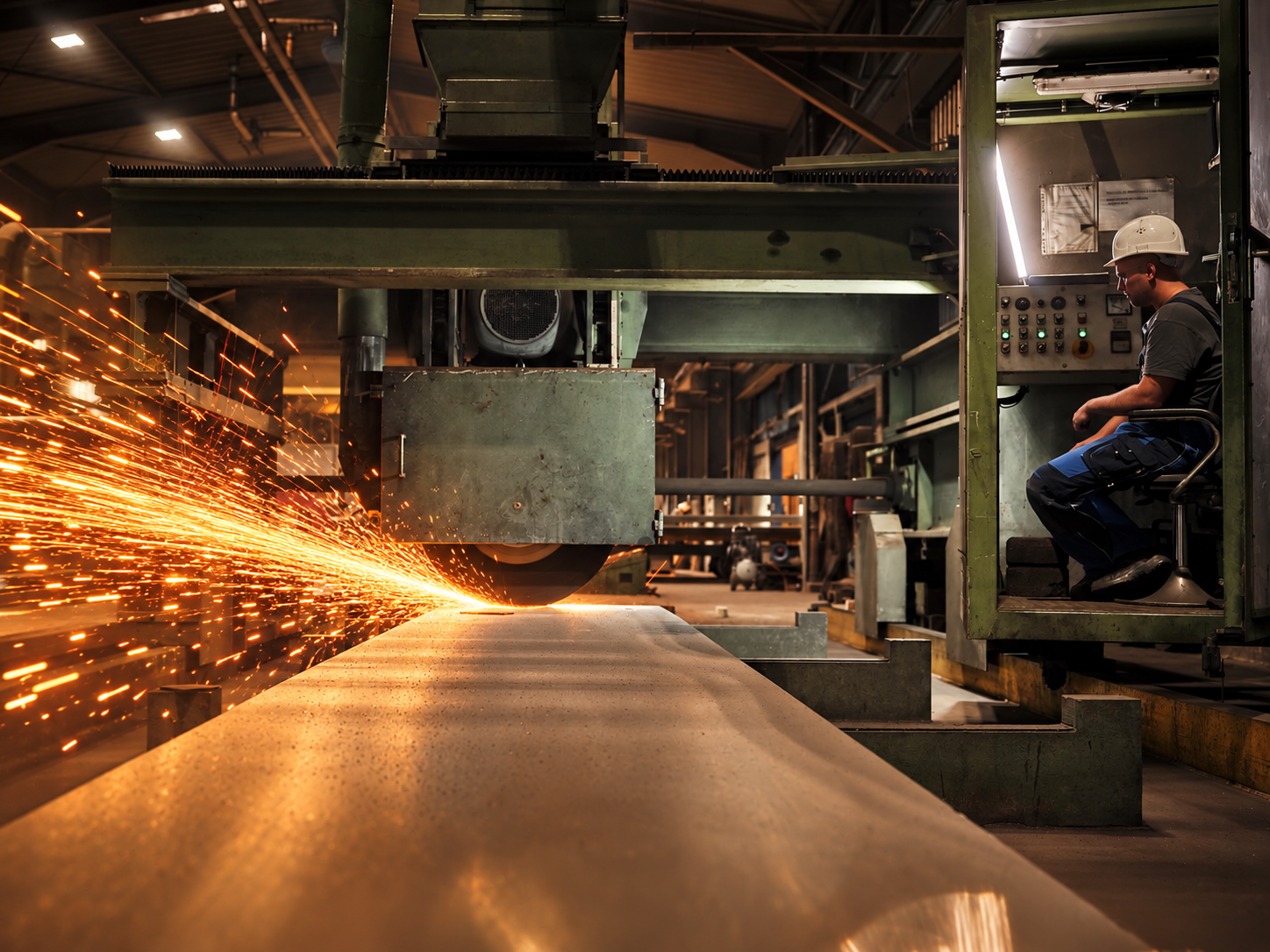
During roller levelling, a suitable flat product passes through staggered rollers and is bent in alternating directions. The workpiece is processed as it travels through the machine. The method is particularly relevant to plate and suitable flame-cut parts.
It is an option when shape and dimensions allow the part to be guided safely through the machine. The continuous process can offer economic advantages for repeat workpieces.
Press straightening: applying force selectively
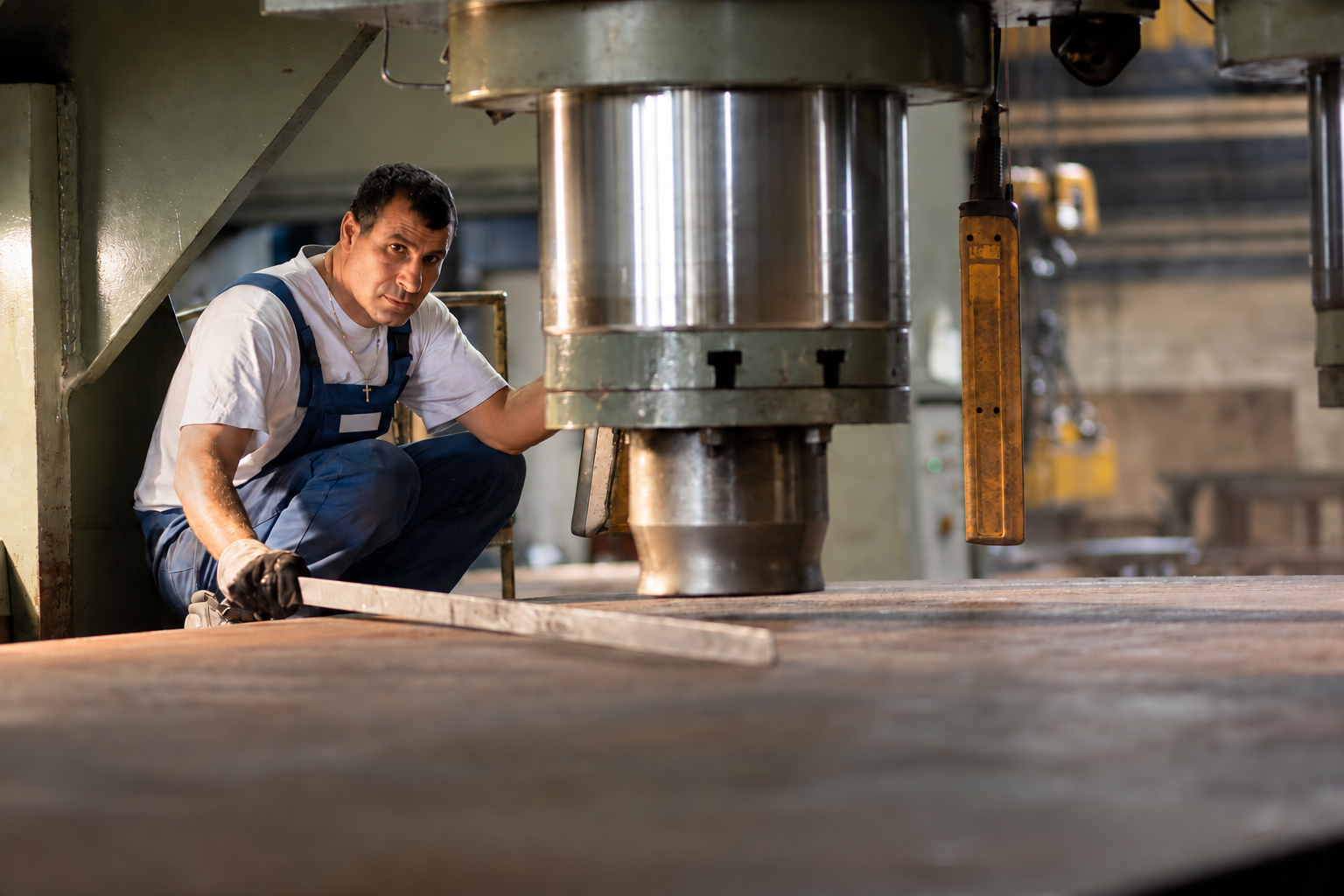
During press straightening, the workpiece rests on defined supports. The press applies force to selected areas. After unloading, the shape is checked and corrected further if required.
This allows local distortion to be addressed and workpieces to be processed that are unsuitable for a roller leveller because of their thickness or geometry. Access, support conditions and material behaviour determine how the correction can be made.
The main differences
Roller levelling: processing in a continuous pass, repeated alternating bending, and a machine-dependent operating range of thickness, width and material strength.
Press straightening: staged processing at selected pressure points, individually arranged supports and targeted corrections. Required forces depend on factors including cross-section, strength and support spacing.
Which method is more accurate or economical can only be assessed for the particular task. High press force or a large number of levelling rollers alone does not guarantee a specific result.
Which route suits your part?
Four questions help select the process: what does the deformation look like? What are the dimensions and material grade? What flatness is required? Which manufacturing steps follow?
BEB has both roller levellers and hydraulic straightening presses. This allows the method to be selected according to the workpiece and required result. A combination of processing steps can also be considered for individual cases.
Enquire with a clear target
Send a drawing, photographs and details of material grade, condition, dimensions, quantity and weight. Describe the existing distortion and required flatness, including the relevant measurement specification.
Also state any subsequent welding or machining operations. BEB can then assess whether roller levelling, press straightening or a coordinated processing sequence suits your task.
Your next step
Let’s talk about your workpiece.
A drawing, material grade, dimensions and required result help us assess your enquiry.