Start with the required result
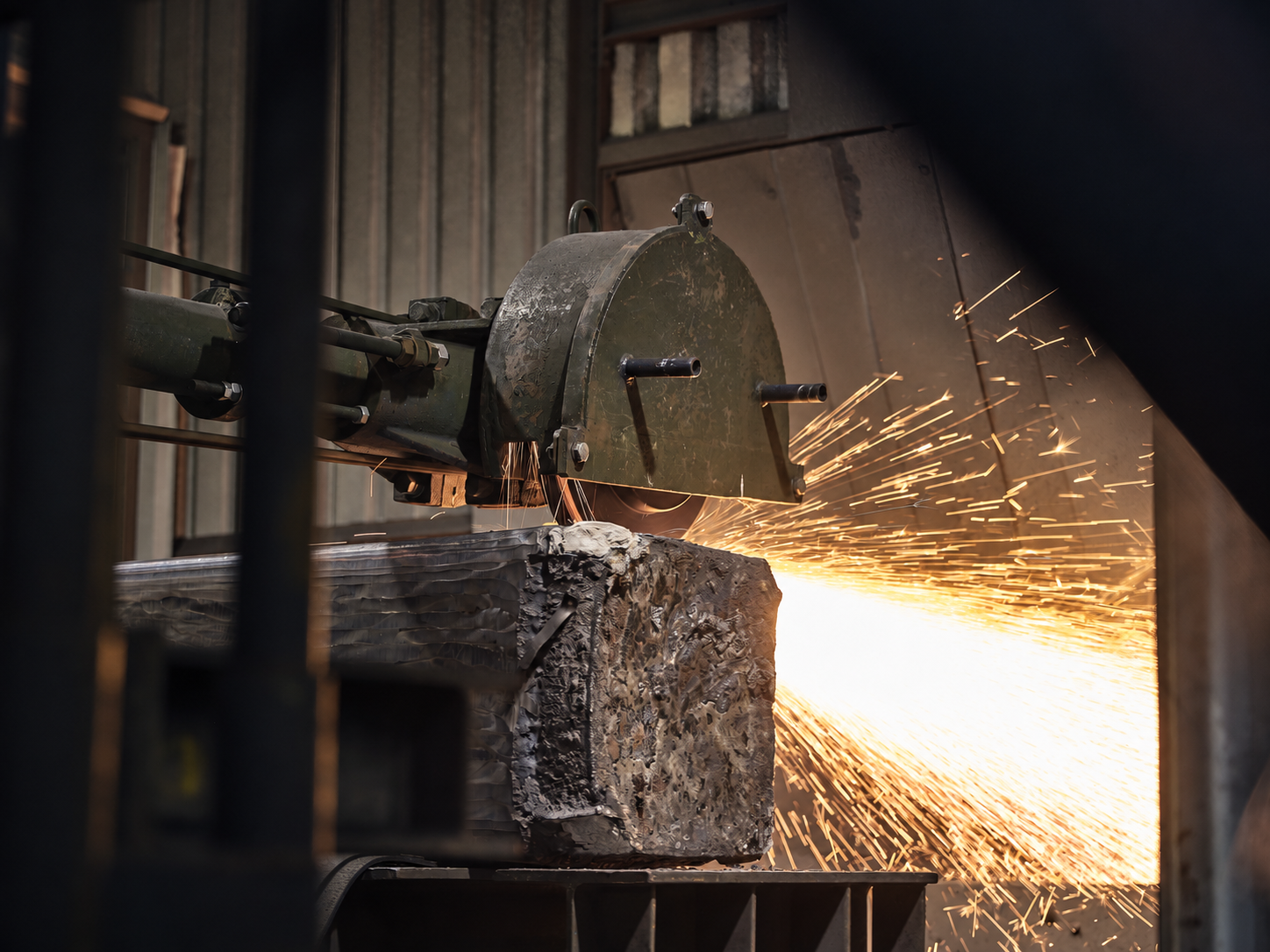
Belt grinding removes material using a continuous abrasive belt. Depending on the application, the aim may be a uniform grinding pattern, an agreed roughness or a specified final thickness.
Before selecting a process, clarify the next use of the part: will it undergo further machining, be coated or serve as a functional surface? A visually uniform finish alone does not define a measurable technical requirement.
When belt grinding is an option
Belt grinding can be considered when flat workpieces need a defined surface finish or a limited amount of material removed. For repeat parts, processing can be adapted to a comparable initial condition.
BEB uses belt grinding for industrial surface and thickness processing. We assess suitability from the material, dimensions, machining allowance and required result.
When another process may be appropriate
Deep local surface defects or greater removal requirements may call for a coarser initial grinding operation. BEB also uses stone grinding machines for this purpose. Stone and belt grinding can be combined to suit the task.
Deformation of the whole plate is a straightening issue. Before grinding, clarify whether the existing flatness is sufficient for the planned operation and whether enough material allowance remains.
Agree roughness, thickness and grinding pattern
Specify final thickness, permissible deviation and the sides to be processed. If roughness is required, state the parameter, such as Ra or Rz, and its permitted value. A grit specification alone is not a substitute.
Grinding direction, areas to remain untouched and requirements for edges or visible surfaces should also be included in the drawing or enquiry. This helps avoid producing a more demanding finish than the function requires.
Assessing the economics
Compare grinding costs, including transport and handling, with the manufacturing steps saved. Surface area, material condition, removal depth, quantity and finish requirements all matter. There is no fixed minimum batch size at which belt grinding always becomes worthwhile.
Send BEB the material grade, dimensions, quantity and weight, along with photographs of the initial condition. Include initial and final thickness, roughness requirements and the intended next process so we can assess the work.
Your next step
Let’s talk about your workpiece.
A drawing, material grade, dimensions and required result help us assess your enquiry.