Roller levelling systems
Offset rollers remove unevenness and internal stress quickly and efficiently. Depending on the material, we process plates up to approximately 30 mm thick and 3,400 mm wide.

Offset rollers remove unevenness and internal stress quickly and efficiently. Depending on the material, we process plates up to approximately 30 mm thick and 3,400 mm wide.
For thicker dimensions, we use powerful presses. Up to 3,000 tonnes of press force meets the experience of our team. Material thicknesses of up to approximately 700 mm are possible.
From structural and stainless steel to pure iron, armour-grade steel and non-ferrous metals: we assess every product individually and select the right processing route.
Our contract straightening service processes your steel plates, heavy plates and other steel products on your behalf. Whether roller levelling or hydraulic pressing is appropriate depends on the material grade, dimensions, existing deformation and required flatness.
To assess your enquiry, we need the material grade, dimensions, quantity and weight, together with details of the deformation and required flatness. Drawings or photographs help us evaluate your material. We use this information to assess feasibility and agree the processing requirements with you.
Looking for a flame straightening service? BEB does not offer flame straightening. We assess whether the deformation of your steel product can be corrected by mechanical straightening using roller levellers or hydraulic presses.
Suitability depends on the material grade, geometry, dimensions and required result. Please send us a drawing or photographs, together with details of the deformation and required tolerances. We assess each product individually for mechanical straightening.
Do you need steel pipes, sections or beams straightened? We use your component specifications to assess whether our straightening systems and hydraulic presses can process them. Material grade, cross-section, length, existing deformation and required straightness determine feasibility.
Please send us a drawing or cross-section sketch, dimensions and photographs of the deformation. For pipes, we also need the outside diameter and wall thickness. Include the quantity, component weight and required tolerances so that we can assess your enquiry.
Is your welded structure distorted, or does a steel component show dimensional deviations after heat treatment or blasting? We assess whether mechanical straightening with our hydraulic presses can correct the deformation. Material grade, component geometry, material condition and required tolerances determine the processing options.
To assess your component, we need a drawing, photographs and details of the measured deviations. Please also provide the steel grade, dimensions, weight and details of any welding, heat treatment or blasting already carried out. We use this information to discuss with you whether and how straightening is possible.
Do you need a deformed roll or cooling plate straightened? We use your component specifications to assess whether mechanical straightening with our hydraulic presses is possible. Material grade, material condition, geometry and required tolerances are key to this assessment.
For rolls, we need a drawing showing diameters, lengths and any stepped sections, together with details of the measured deformation. For cooling plates, please provide the length, width, thickness and deviation from flatness. Include the material grade, component weight and required tolerances. Your documentation should identify features such as cavities, cooling channels or coatings.
Knowledge
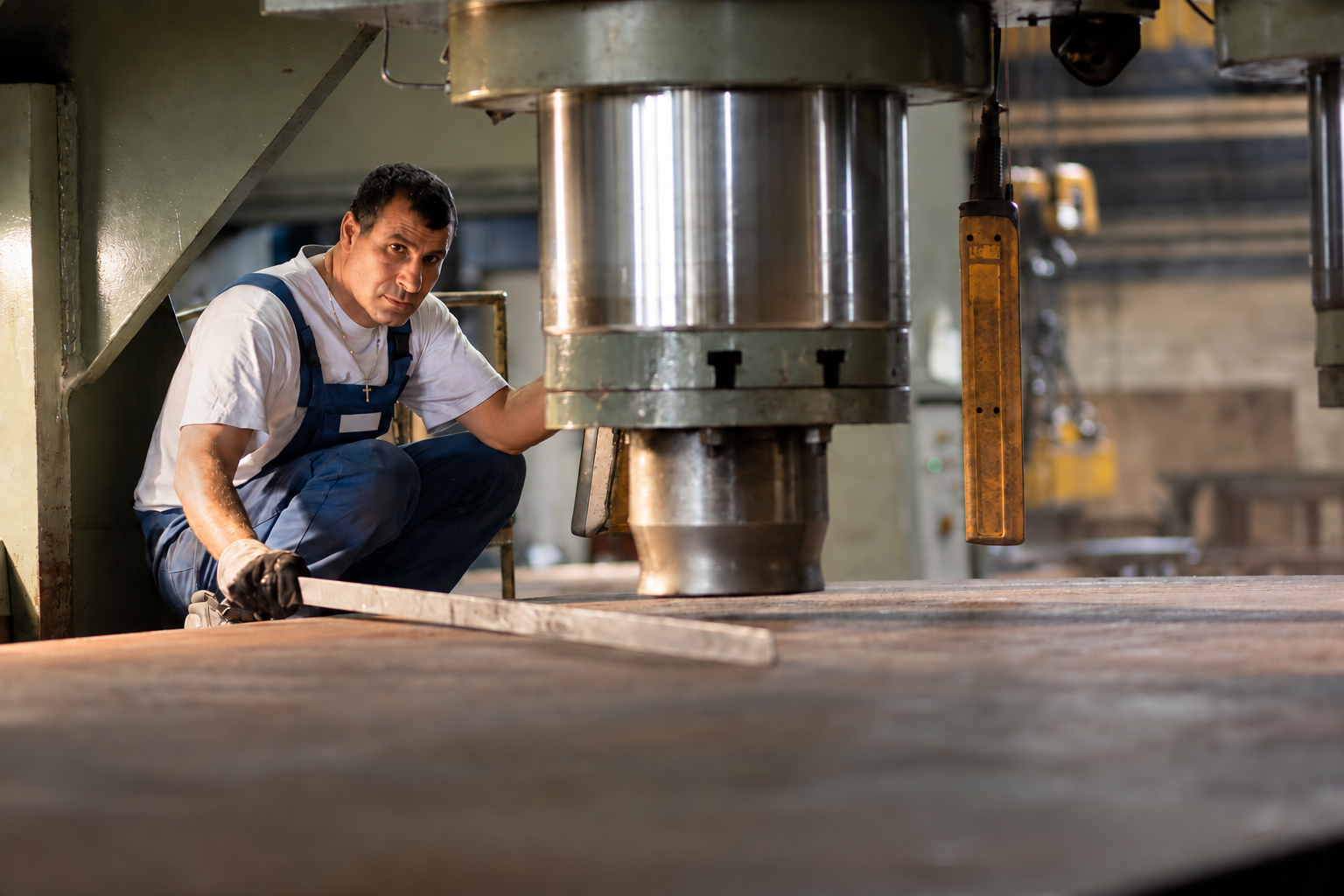
When does heavy plate need straightening, which method suits the workpiece and where are the limits? A guide for planning, procurement and production.
Read article
How flat does a flame-cut part need to be? The key factors are its function, an unambiguous tolerance specification and agreed measurement conditions.
Read article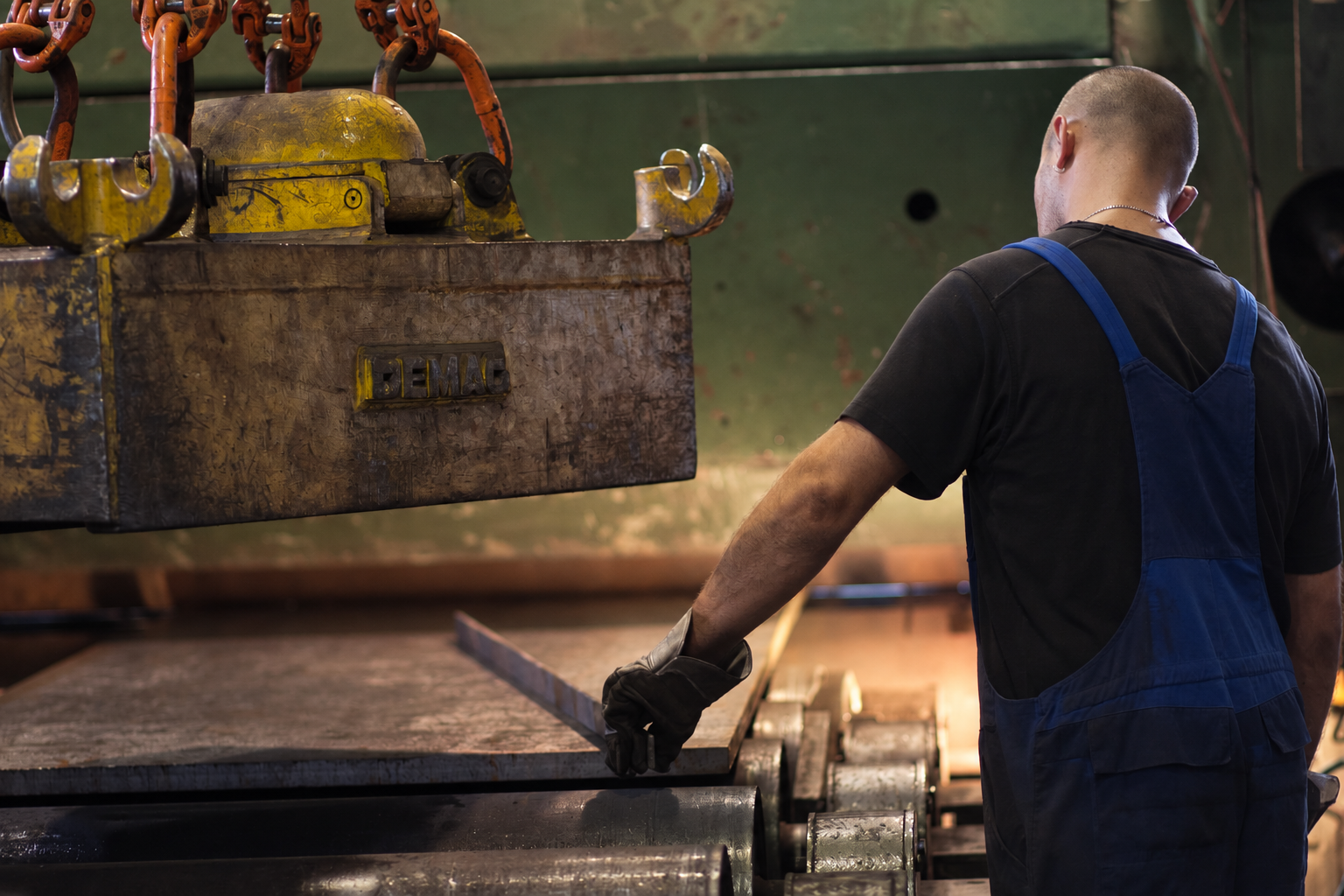
Both methods correct deformation mechanically. They differ in how force is applied and which workpieces they can process.
Read articleDirect contact
